Queer Places:
University of Glasgow, Glasgow G12 8QQ, United Kingdom
University of Cambridge, 4 Mill Ln, Cambridge CB2 1RZ
84 Lavender Sweep, London SW11 1HD, UK
Brompton Cemetery, Fulham Rd., London SW10 9UG, United Kingdom
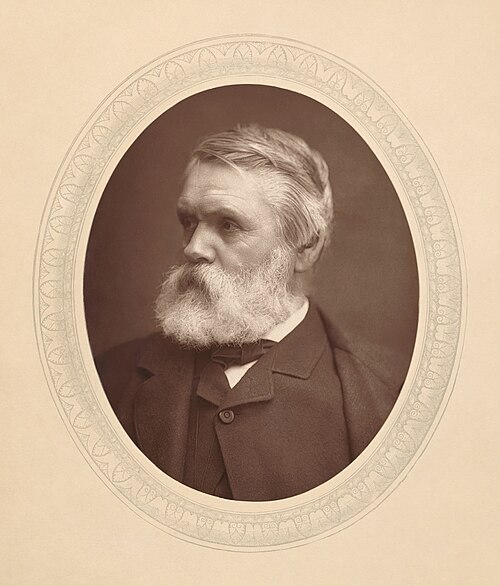 Tom Taylor (October 19, 1817 – July 12, 1880) was born on October 19, 1817, in Bishopwearmouth, a suburb of Sunderland in County Durham, the second son of Thomas Taylor, a
self-made man who rose from a Cumberland farm laborer to become co-owner of a flourishing Durham brewery, and his wife, Maria Josephina Arnold, whose parents were natives of
Frankfurt. Educated initially at the Grange School in Sunderland and for two sessions at the University of Glasgow where he earned three gold medals, Taylor entered Trinity
College, Cambridge, in 1836. He excelled academically, earning a scholarship in 1838, graduating in 1840 as the fifth classic and a junior optime in mathematics, and
securing a fellowship at Trinity in 1842 alongside his Master of Arts degree in 1843. During his time at Cambridge, he became a member of the elite intellectual society
known as the Cambridge Apostles.
Tom Taylor (October 19, 1817 – July 12, 1880) was born on October 19, 1817, in Bishopwearmouth, a suburb of Sunderland in County Durham, the second son of Thomas Taylor, a
self-made man who rose from a Cumberland farm laborer to become co-owner of a flourishing Durham brewery, and his wife, Maria Josephina Arnold, whose parents were natives of
Frankfurt. Educated initially at the Grange School in Sunderland and for two sessions at the University of Glasgow where he earned three gold medals, Taylor entered Trinity
College, Cambridge, in 1836. He excelled academically, earning a scholarship in 1838, graduating in 1840 as the fifth classic and a junior optime in mathematics, and
securing a fellowship at Trinity in 1842 alongside his Master of Arts degree in 1843. During his time at Cambridge, he became a member of the elite intellectual society
known as the Cambridge Apostles.
After leaving Cambridge, Taylor pursued multiple demanding career paths simultaneously. He spent a brief period coaching students, entered the Inner Temple in 1840, and
was called to the bar in November 1846, subsequently practicing on the Northern Circuit. Simultaneously, he immersed himself in academia and public service, serving as a
professor of English literature and language at University College London from 1845 to 1847. In 1850, he transitioned into civil administration as assistant secretary to the
newly formed Board of Health, advancing to secretary in 1854 and later managing sanitary departments under the Home Office until his retirement on a pension in 1871.
Despite his distinguished civil service and academic background, Taylor achieved his greatest renown as a prolific journalist, art critic, and dramatist. He was a
foundational figure on the staff of the weekly humor magazine Punch, contributing commentary and comic verse for thirty-six years before succeeding Shirley Brooks as its
editor from 1874 until his death in 1880. He also leant his critical eye as an art critic for prominent publications including The Times and The Graphic, and authored and
edited several biographical and historical works, including biographies of Benjamin Robert Haydon and Sir Joshua Reynolds, as well as a study of Leicester Square.
As a playwright, Taylor produced roughly one hundred dramatic works, ranging from farces and burlesques to domestic melodramas and blank-verse historical tragedies. Among
his earliest successes was the 1846 farce To Parents and Guardians, followed by enduring collaborations with authors like Charles Reade, yielding works such as Masks and
Faces in 1852. His most celebrated contributions to the stage included Still Waters Run Deep in 1855, the melodrama The Ticket-of-Leave Man in 1863, and historical dramas
like Lady Clancarty. His most famous work internationally was Our American Cousin, which premiered in New York in 1858 and became a massive 19th-century success, though it
is now historically immortalized as the play President Abraham Lincoln was attending when he was assassinated in 1865.
Regarding his personal life and potential LGBTQ or homosocial links, historical records show that Taylor married Laura Wilson Barker in June 1855, a talented composer,
musician, and artist with whom he had two children, John Wycliffe and Laura Lucy Arnold. The couple established a vibrant cultural salon at their home in Battersea, hosting
weekly musical soirées attended by leading literary and artistic figures of the Victorian era such as Charles Dickens,
Alfred Tennyson, and Lewis Carroll. While the original house no longer stands, the site of his home is commemorated at
84 Lavender Sweep, London, SW11 2UG. This address features an elegant fanlight over the front door that was salvaged and recycled from the original Lavender Sweep House. A
commemorative plaque dedicated to Tom Taylor and his wife, the composer Laura Barker, has also been placed at this location.
While Taylor operated comfortably within these brilliant Victorian creative circles and was
deeply embedded in homosocial intellectual networks like the Cambridge Apostles, mainstream historical documentation attributes no non-traditional romantic or sexual
liaisons to him outside of his conventional marriage to Laura Barker.
Taylor maintained his trademark rigorous work ethic and boundless energy well into later life, frequently rising at dawn to write before walking miles to his official
office. He died suddenly at his home on Lavender Sweep in Battersea on July 12, 1880, at the age of sixty-two, and was buried in Brompton Cemetery, leaving behind a vast
legacy as one of the defining literary, theatrical, and journalistic figures of Victorian London.
References:
Other references:
- Dictionary of National Biography (DNB): The foundational biographical entry on Tom Taylor, detailing his ancestry, education at Glasgow and Trinity College, Cambridge, legal career, civil service tenure with the Board of Health, and extensive output as a dramatist and editor.
- Dictionary of National Biography, Errata (1904): Contains corrections and addenda to the original DNB text (specifically noting additions to Taylor's chronological play production history).
- Encyclopædia Britannica: Provides standardized biographical summaries covering his birth in Bishopwearmouth, academic and civil service background, editorship of Punch, and the historical legacy of Our American Cousin.
- Venn, J. A., Alumni Cantabrigienses: University of Cambridge matriculation and admissions records tracking Taylor's academic trajectory, including his entrance to Trinity College in 1836, scholarship election in 1838, BA (5th Classic, 1840), MA (1843), and Fellowship (1842).
- The Law Lists & Inns of Court Records: Official documentation of his admission to the Inner Temple in June 1840, his call to the bar in November 1846, and his practice on the Northern Circuit.
- Punch Magazine Archives: Spanning his 36-year association with the weekly humor magazine, including his early humorous columns and comic verse starting in October 1844, up to his tenure as editor from 1874 to 1880.
- The Times: Contemporary news reports, theatrical reviews of his roughly 100 stage productions, obituary notices published on July 13, 1880, and archives of his work as an art critic.
- The Graphic: Periodical records reflecting his contributions as an art critic alongside The Times.
- The Morning Chronicle & Daily News: Mid-19th-century archives documenting his early work as a prominent leader writer in London.
- Vanity Fair (1876): Features the notable caricatures and accompanying biographical sketches of Taylor by the artist "Spy" (Leslie Ward).
- The Annual Register (1880): Contains the yearly chronicle of notable deaths, including a dedicated obituary and overview of his life and public service on page 180.
- The Illustrated Review (May 8, 1873): Features an early biographical memoir of Taylor accompanied by a contemporary portrait.
- Terry, Ellen, The Story of My Life: Memoirs by the celebrated Victorian actress offering personal recollections of Taylor as a guiding figure, "institution," and family friend to children on the stage.
- Irving, Henry: Critical commentary and published remembrances evaluating Taylor's masterly understanding of stagecraft and theatrical mechanics.
- Burnand, F. C.: Contemporary accounts and memoirs from fellow staff members at Punch offering alternate perspectives on Taylor's editorial temperament and personality.
- Taylor's Personal Holograph Notes: Manuscript jottings and autobiographical notes provided directly by Taylor to early biographers and journalists.
- Taylor, Tom, Life of Benjamin Robert Haydon: 3-volume biographical work edited and published by Taylor in 1853.
- Taylor, Tom (Ed.), Autobiography and Correspondence of C. R. Leslie, R.A.: Published in 1860, preserving the records of his close artist friend.
- Taylor, Tom, Life and Times of Sir Joshua Reynolds: Completed following C. R. Leslie's passing and published in 1865.
- Taylor, Tom, Leicester Square: its Associations and its Worthies: An entertaining historical and topographical study published in 1874.
- Taylor, Tom (Ed.), Pen Sketches from a Vanished Hand: Collected essays of his friend Mortimer Collins.
- Taylor, Tom, Ballads and Songs of Brittany: Translation from the Barsaz-Breiz of Hersart de la Villemarqué, featuring musical harmonizations by his wife, Laura Barker Taylor (1865).
- Collected Historical Dramas (1877): Taylor's own published collection of his blank-verse historical plays (such as The Fool's Revenge, 'Twixt Axe and Crown, and Lady Clancarty).
- Howes, Craig: Modern scholarly analyses and biographical profiles detailing Taylor's literary output, journalistic career, and social circle.
- Spielmann, M. H., The History of Punch: Detailed institutional history containing miniature photographs, sketches by Richard Doyle of Taylor in the magazine's inner circle, and documentation of Punch fancy-dress balls.
- Purnell, Thomas, Dramatists of the Day: Critical evaluations of Victorian playwrights positioning Taylor within the context of 19th-century theatre.
- Find A Grave & Parish Registers: Burial records confirming his interment in Brompton Cemetery on July 16, 1880, alongside vital registration details from Bishopwearmouth and Battersea.
Support this project
This website is a passion project researched, developed, and funded entirely by me. If you find the content valuable and would like to help support the ongoing research and hosting costs, any contribution is deeply appreciated.
Thank you for keeping this independent resource alive!
My books on Amazon: Elisa Rolle's books
BACK TO HOME PAGE
